

Shruti Sadolikar: Raag Bihari
“That music always round me, unceasing, beginning, yet long untaught I did not hear, / But now the chorus I hear and am elated.”—Walt Whitman
Many composers get their inspiration from nature. There are so many beautiful places around the world. This June, the Daily Classical Music Post will travel around the world to national parks and reserves to discover the inspiration for some wonderful pieces of music!
Bihari | Shruti Sadolikar | Jaipur-Atrauli Gharana
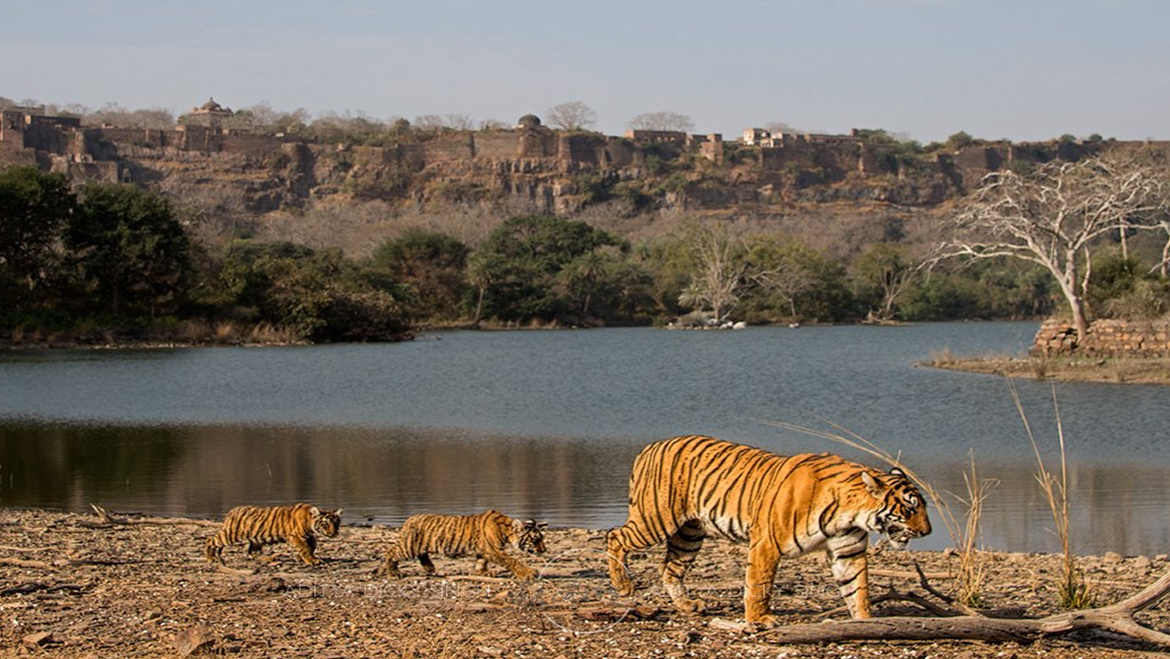
Ranthambore National Park, in Rajasthan, northern India, is one of the largest parks in the region. It is named after Ranthambore Fort, most likely built in the mid-10th century CE by a Chauhan rajput. The fort is a UNESCO World Heritage Site (one of the Hill Forts of Rajasthan). The fort is surrounded by a Project Tiger reserve (dedicated in 1973) and the national park (declared in 1980). Dozens of species of animals, most notably tigers, are protected within the park’s borders, although in recent years poaching has led to a decline in the tiger population.
Visitors can watch wildlife in the park in a number of different ways, most notably via a range of safaris and four-wheel-drive tours. Inside the fort, there are three Hindu temples as well as a Jain temple. It’s fairly straightforward to drive to the main steps into the fort and then climb a stone path into the building.
I plan to dedicate future DCMP months to non-Western classical music, but today I am sharing the classical music of Rajasthan, in particular, that of the Jaipur-Atrauli gharana, the community of performers of this extremely complex and melodic Hindustani music. The notion of the gharana dates back over 500 years. Integrity of preservation of the music is vital; it can take years to master a particular style and be considered a gharana.
While it is true that a particular standard and pattern in the music must be followed, it is important to note that within the framework of the raga is the practice of improvisation. And this is where Indian classical music really shines. In this sense, each performer composes in real time. The skill and musical knowledge required is incredible.
Shruti Sadolikar Katkar (b. 1951) is one of the acknowledged masters of the khyal style in the Jaipur-Atrauli gharana. She comes from a long line of Indian classical musicians (she says something about this at the start of the performance in today’s link). She also explains a little about Raag Bihari, which many believe dates back to the 16th century, with some connections to 14th- to 18th-century folk songs.
My classical music post for today is Shruti Sadolikar’s performance of Raag Bihari.


Leave a Reply