

Alberto Ginestra: “La noche de los tiempos”
“That music always round me, unceasing, beginning, yet long untaught I did not hear, / But now the chorus I hear and am elated.”—Walt Whitman
Many composers get their inspiration from nature. There are so many beautiful places around the world. This June, the Daily Classical Music Post will travel around the world to national parks and reserves to discover the inspiration for some wonderful pieces of music!
Popol vuh, Op. 44: I. La Noche de los Tiempos
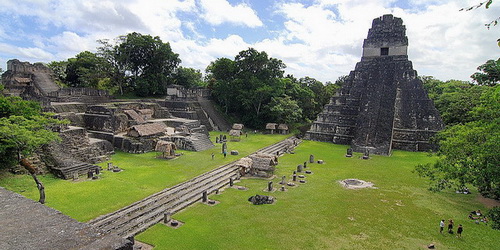
Tikal National Park, situated in northern Guatemala, is the site of one of the major Mayan cities. Incredibly well-preserved temples, palaces, monuments, and public buildings can be seen in the urban zone; around this archaeological gem is an area of ecological importance. In all, the national park is 575 sq km (220 sq mi). Tikal was inhabited from some time in the 6th century BCE to the 10th century CE. The national park designation dates from 1955, and UNESCO declared Tikal a World Heritage Site in 1979, both for its Mayan ruins and for the unique ecology surrounding the site. Tikal is also situated within the Maya Biosphere Reserve.
Visitors can do much more than just visit the ruins, which in itself is an undertaking, as hiking through jungle is the only way to reach the site. Most first-time visitors hire a guide, at least for their first day. It’s best to visit either in the early morning or late afternoon. For an additional fee, visitors can remain in the park for two hours after closing (at 6 pm) to observe the sunset and nocturnal wildlife.
The Argentinian composer Alberto Ginestra (1916–1983) is one of the most significant 20th-century composers of the Americas—yes, not just of South America, or Central America, but of North America as well.
Ginestra began work on Popul Vuh: The Creation of the Mayan World, Op. 44 in 1975, but he had only completed seven movements by the time he died. He had planned an eighth movement, most likely for percussion only, although whether this was to be the final or the penultimate movement is a subject of some debate. Ginestra was inspired by the Mayan creation myth, written down by Father Francisco Ximénez in c. 1701. He wrote the manuscript in K’iche’, the language of the Maya who lived in Guatemala, and the book was called “Popul Vuh,” or “Book of the Community.”
The first movement of Popul Vuh fills the listening with a sense of foreboding as well as anticipation. The notion of an unending night-time (the movement is titled “La noche de los tiempos”) is depicted brilliantly by Ginestra in the orchestration and use of low registers for many of the instruments. There is a brief moment of chaos when the Divine Council creates the world.
My classical music post for today is Alberto Ginestra’s Popul Vuh: The Creation of the Mayan World: “La noche de los tiempos.”


Leave a Reply