

Elisenda Fábregas: Colores Andaluces
“That music always round me, unceasing, beginning, yet long untaught I did not hear, / But now the chorus I hear and am elated.”—Walt Whitman
Many composers get their inspiration from nature. There are so many beautiful places around the world. This June, the Daily Classical Music Post will travel around the world to national parks and reserves to discover the inspiration for some wonderful pieces of music!
COLORES ANDALUCES for cello & piano by Elisenda Fábregas, performed by David J. Kim and Jinha Park
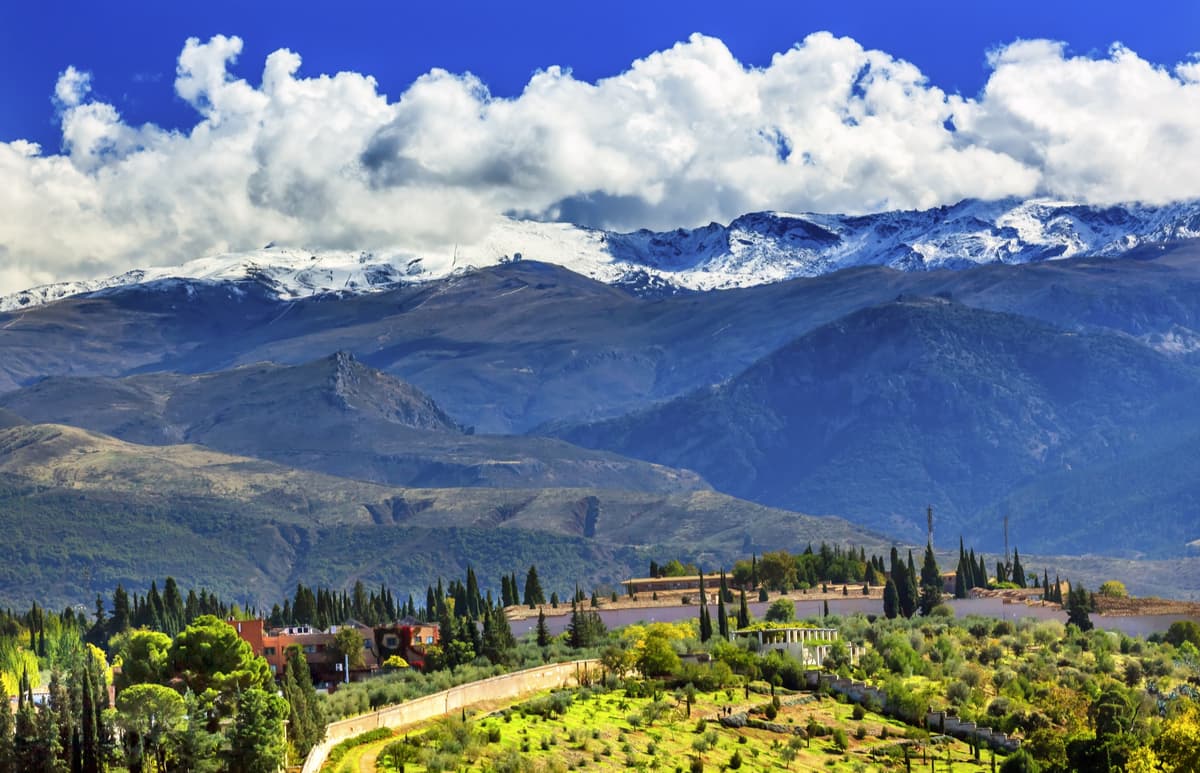
The Andalusia region of Spain is the southernmost area of the country, comprising eight provinces and the majestic Sierra Nevada mountain range. Sierra Nevada National Park, declared in 1999, covers an area of more than 85,000 hectares. There are more than 20 peaks that are over 3,000 meters tall (almost 10,000 feet), offering visitors many hiking opportunities. In the winter, skiing is a very popular activity, and the ski lifts also run in the summer to spots where amazing views can be seen. Rock climbing and cycling are also popular activities. The particular location of the park results in unusual (for Europe) flora and fauna, including the ibex and wild boar, and many different types of birds.
Elisenda Fábregas (b. 1955) is a Spanish American composer described as having “fluid technique and a poet’s command of musical shading.” Orchestras and ensembles throughout the world have commissioned her imaginative works, and she has received many awards.
In 2006, Fábregas composed Colores Andaluces for cello and piano for the cellist Françoise Groben of the Meininger-Trio. The five-movement work received its premiere in Germany in October 2006. The composer says that this is “a work consisting of short pieces in the Spanish style. . . . [It] is the product of intense and focused inspiration, a very spontaneous work written within a few days.” The movements are: I. Tres morillas (Three Moorish girls; this is the title of a popular 15th-century Spanish song from the Andalusia region, often referenced in Spanish art music); II. Duende; III. Nana; IV. El Jinete (a medieval mounted warrior introduced to the Iberian peninsula by the Berbers in the 8th century); and V. Zapateado (an Andalusian dance style similar to tap dance). This beautiful work definitely gives listeners a flavour of Andalusia!
My classical music post for today is Elisenda Fábregas’ Colores Andaluces.


Leave a Reply