

Gustav Mahler: Symphony No. 3
“That music always round me, unceasing, beginning, yet long untaught I did not hear, / But now the chorus I hear and am elated.”—Walt Whitman
Many composers get their inspiration from nature. There are so many beautiful places around the world. This June, the Daily Classical Music Post will travel around the world to national parks and reserves to discover the inspiration for some wonderful pieces of music!
Mahler – Symphony No 3 – Abbado
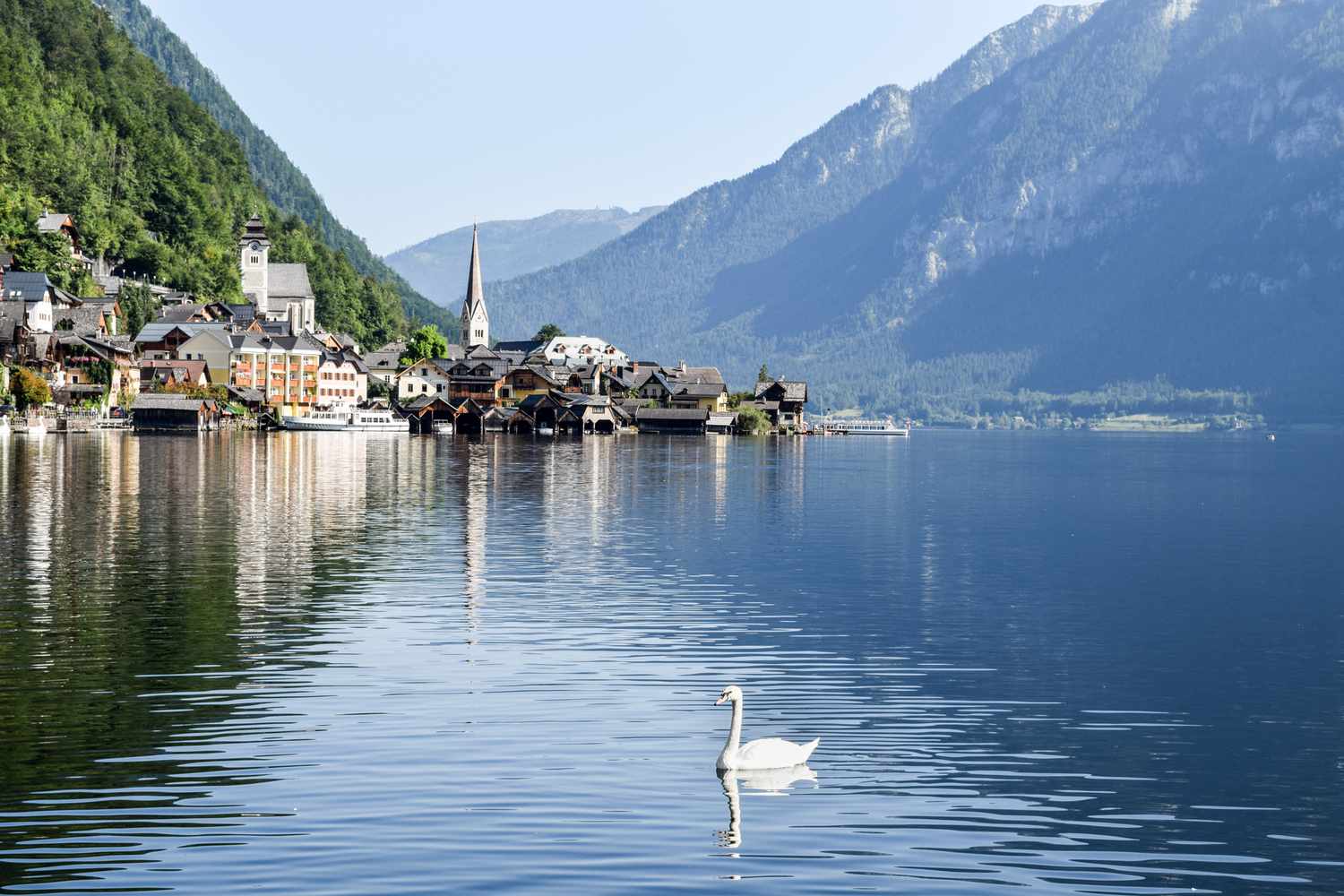
Not far from Salzburg, Austria, one can find the Salzkammergut Lake District, an area of lakes, mountains, and historical salt mines. The Sound of Music was filmed there, so even if you have never been, you’d recognise the landscape in a minute. Visitors can hike, take a cable car to a spot for panoramic views, tour ice caves, paddle in Lake Hallstatt, and much more.
The monumental Austro-Bohemian composer Gustav Mahler (1860–1911) had a retreat in Seefeld in the Salzkammergut Lake District. This is where several of his works were composed. It was just a little one-room house (he called it his “composing retreat”), but he did wander around and was inspired by the landscape. Brian Wise says, “When Gustav Mahler was composing his Symphony No. 3 in Steinbach am Attersee—part of Austria’s spectacular Salzkammergut lake district—the young conductor Bruno Walter paid him a visit. As Walter stepped off the ferry boat, Mahler saw that his guest was gazing up at the cragged, limestone mountains which provided a dramatic backdrop to the lakefront. ‘No need to look up there,’ Mahler reportedly said. ‘It’s all in my new symphony!’”
Symphony No. 3 has six movements. It is the longest symphony in the repertoire, lasting over 90 minutes (sometimes well over 100 minutes). Each movement has a title: “Pan Awakes, Summer Marches In” (Mahler said to a friend in a letter that he “could equally well have called the movement ‘What the Mountain Tells Me’”); “What the Flowers of the Field Tell Me”; “What the Animals of the Forest Tell Me”; “What Man Tells Me”; “What the Angels Tell Me”; and “What Love Tells Me.” It is scored for a large orchestra as well as choirs in movement 5 and an alto soloist in movements 4 and 5. Mahler considered calling the work a symphonic poem rather than a symphony, but in the end he realised that he was only pushing the boundaries of what a symphony was. In any case, the symphony is a celebration of life, of nature, of what we are, and of what we can be. It is an extraordinarily powerful work.
My classical music post for today is Gustav Mahler’s Symphony No. 3.


Leave a Reply