

Silvestre Revueltas: La noche do los mayas
“That music always round me, unceasing, beginning, yet long untaught I did not hear, / But now the chorus I hear and am elated.”—Walt Whitman
Many composers get their inspiration from nature. There are so many beautiful places around the world. This June, the Daily Classical Music Post will travel around the world to national parks and reserves to discover the inspiration for some wonderful pieces of music!
Silvestre Revueltas – La Noche de los Mayas (1939) Score
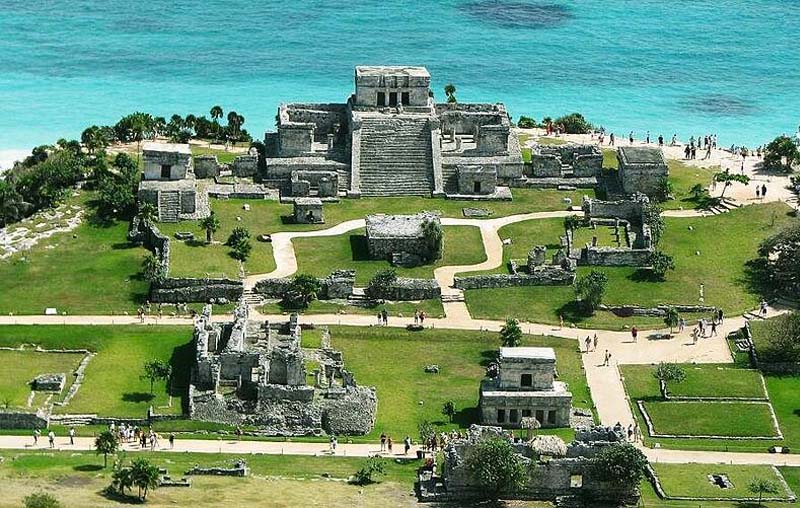
Tulum National Park in Mexico is the site of a pre-Columbian Mayan walled city, originally named Zama. Tulum was a major port city in the 13th to 15th centuries and was abandoned at the end of the 16th century. It is one of the best-preserved Mayan sites. In addition to the ruins, visitors can go for a swim in the Caribbean, scuba dive in a cenote, or take a walk along the sandy beach. There are many different types of vegetation and mammals, and parrots are commonly seen as well.
The Mexican composer Silvestre Revueltas Sánchez (1899–1940) was a famous violinist and conductor before he became known as a composer. The poet Octavio Paz said of Revueltas, “All his music seems preceded by something that is not [simply] joy and exhilaration, as some believe, or satire and irony, as others believe. That element, better and more pure, . . . is his deep-felt but also joyful concern for man, animal and things. . . . His music occupies a place in our hearts above that of the grandiose Mexican murals, that seem to know all, except pity.”
In 1939, Revueltas composed the music to La noche do los mayas (The Night of the Mayas), a film set in the time of the Mayas. No one really remembers the film, but Revuletas’ music lives on in several arrangements: a two-movement suite by Paul Hindemith and the more well-known four-movement suite by José Limantour (shared today).
Be warned: Limantour took many liberties when creating his suite, including an extended percussion improvisation at the end of the fourth movement, which is pretty much 99% Limantour and 1% Revueltas. Abderrahman Anzaldua says, “The music that appears in the film . . . is generally contained within the first and second movements of Limantour’s suite. The third movement is included within the context of the film, but is heavily edited. . . . The fourth movement, however, is not heard within the film itself. . . . The end of the last movement is a restatement of the theme of the first movement.”
My classical music post for today is Silvestre Revueltas’ La noche do los mayas.


Leave a Reply