

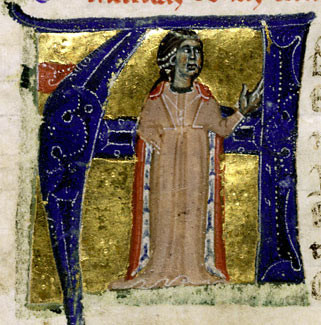
Comtessa de Dia: A chanter m’er de so qu’eu no volria
“That no woman has ever been a great composer is an accepted fact; that she is never likely to become so, more than a probability.”—Anonymous, The Musical Times (1887)
This May, the Daily Classical Music Post will set the record straight. There have been many great women composers, and I’m going to introduce you to just 31 of them and their wonderful music.
Beatriz de Dia: A chantar m’er de so q”ieu no voldria
One of the things that I really love about writing the DCMP is that I often learn something that I didn’t know before. For example, I knew all about the troubadours of the 12th and 13th centuries, but I never knew that women, called trobairitz, were also active at the same time. They were never mentioned in any music history text, and it was always implicit that only men composed and performed this Old Occitan lyric poetry. It turns out, however, that the trobairitz were the first known women composers of Western secular music.
The Comtessa de Dia (fl. c. 1175?) is known because her canso A chanter m’er de so qu’eu no volria is the only complete extant example by a trobairitz. A chanter m’er de so qu’eu no volria tells the story of a betrayed lover. In the second verse, the Comtessa refers to Seguin and Valensa (“I love you more than Sequin loved Valensa”), legendary lovers who would have been familiar to listeners at the time. There are three other cansos and one tenson by the Comtessa that survived but they are not complete.
There is very little known about the Comtessa de Dia; there is speculation that she might have been the daughter of Count Isoard II of Diá in Provence, named Beatriz, but that’s not been verified.
A chanter m’er de so qu’eu no volria (12th century) employs a common rhyming scheme of the High Middle Ages, coblas singulars, in which the rhyming sounds in each stanza (cobla) never changes but the sounds of each cobla is different. The intricate melodic line is highly ornamented and the influence of Arabic music can be heard, not surprising given the historical ties between Occitania and Arab Spain.
My classical music post for today is the Comtessa de Dia’s A chanter m’er de so qu’eu no volria.


Leave a Reply