

Guadalupe Olmedo: Quartetto Studio Classico Op. 14
“That no woman has ever been a great composer is an accepted fact; that she is never likely to become so, more than a probability.”—Anonymous, The Musical Times (1887)
This May, the Daily Classical Music Post will set the record straight. There have been many great women composers, and I’m going to introduce you to just 31 of them and their wonderful music.
Guadalupe OLMEDO: STUDIO CLASSICO, Quartetto per archi Op. 14 (1875) [Vídeo-Score]
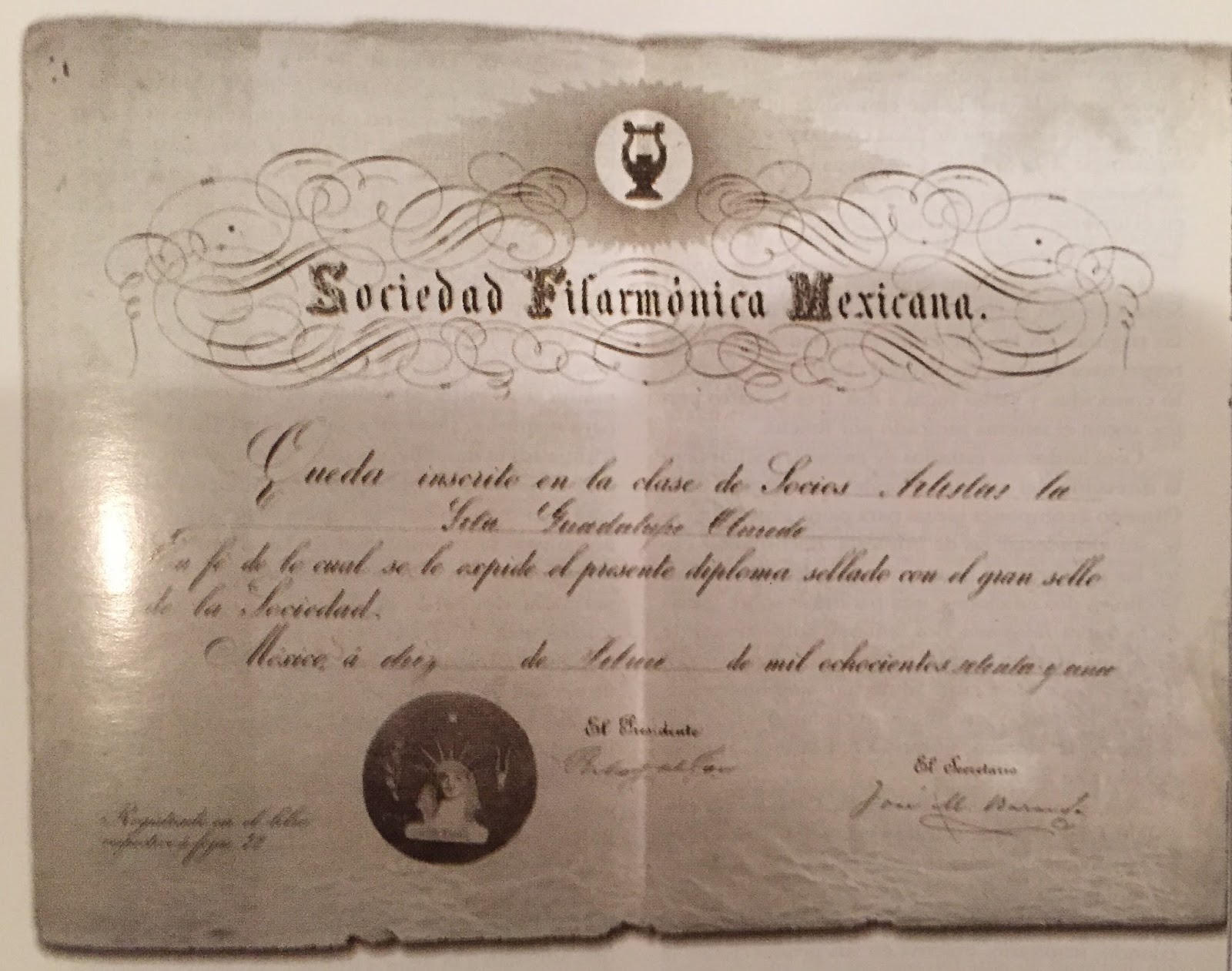
The Mexican Romantic composer Guadalupe Olmedo (1853–1889) discovered a love for composition while studying piano at the Conservatorio Nacional de Música in Mexico City. She received a medal to acknowledge “Miss Guadalupe Olmedo, the first female Mexican composer who wrote in the classic genre.”
It is very difficult to find out much about Olmedo, which is a real shame. (I couldn’t even find a photo of her for today’s post.) She was obviously destined for a great career judging by her Quartetto Studio Classico Op. 14 (1875), which is considered to be the first string quartet by a Mexican composer. Some scholars believe that Cenobio Paniagua (the “father of Mexican Romantic opera”) was the first; if that is the case, well, in any event, Olmedo was the first Mexican woman composer to do so. Francisco Sosa wrote that Olmedo’s music displays a “placid melancholy that portrays the character of the children of Mexico” and an “ineffable sweetness that flows from the sensitive and delicate hearts of our women.”
But, as has so often been the case, because she married her teacher Melesio Morales, one of the most important 19th-century Mexican composers, her output and career were overshadowed by that of her husband.
My classical music post for today is Guadalupe Olmedo’s Quartetto Studio Classico Op. 14.


Leave a Reply