

Dorothy Rudd Moore: Night Fantasy
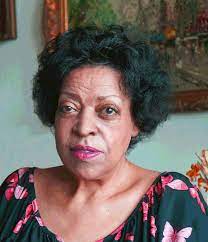
“That no woman has ever been a great composer is an accepted fact; that she is never likely to become so, more than a probability.”—Anonymous, The Musical Times (1887)
This May, the Daily Classical Music Post will set the record straight. There have been many great women composers, and I’m going to introduce you to just 31 of them and their wonderful music.
Until very recently, I’d never heard of Dorothy Rudd Moore (1940–2022), and I didn’t know any of her music. I have missed out on so much.
And there is a lot of music of Moore’s to discover: song cycles, chamber works, orchestral pieces, and an opera based on the life of Frederick Douglass.
Moore grew up in Delaware and went to Philadelphia Orchestra concerts from a young age. She was fascinated by the sounds that she heard and also was intrigued by the fact that almost everyone in the orchestra appeared to be male and white. Interestingly, all that made her feel was, “Hey, I can write this kind of music!”
Moore won a scholarship to study with Nadia Boulanger in Paris, and she has talked about how Boulanger had a profound effect on her. Brin Solomon points out, “although she occasionally uses compositional techniques developed by other black composers (she was especially fond of Duke Ellington), her music is typically devoid of the ‘black idioms’ that many other black composers employed, favoring instead a high modernist style that has much in common with the white European then-contemporary vogue.”
In 1990, Moore was interviewed on a classical music radio station. When she was asked about the joys and sorrows of being a composer in the late 20th century, she replied, “The joy comes in hearing a composition of yours performed well. As for sorrows, I can’t really speak of any. I’ve been so fortunate to do the thing that I chose to do, and when you consider everything else that goes on in the world, to write music is a luxury.”
When Moore was in high school, so the story goes, she learned to play the clarinet so that she could play in the all-male band. I think her understanding of the clarinet shines in Night Fantasy, for clarinet and piano, composed in 1978. Brin Solomon says, “Right from the start of her 1978 Night Fantasy, it’s clear that we’ve left tonal waters behind, as the piano taps out a spare, sickly figure with ambiguous harmonies underneath. After this introduction, the clarinet enters with a languid flourish, leading to a series of melodic fragments that sound like the cries of some strange tropical bird. . . . There is a furtive, searching quality to the music, as though the two players are wary of trusting each other enough to really come together.”
My classical music post for today is Dorothy Rudd Moore’s Night Fantasy.


Leave a Reply