

Germaine Tailleferre: Sonata for Harp
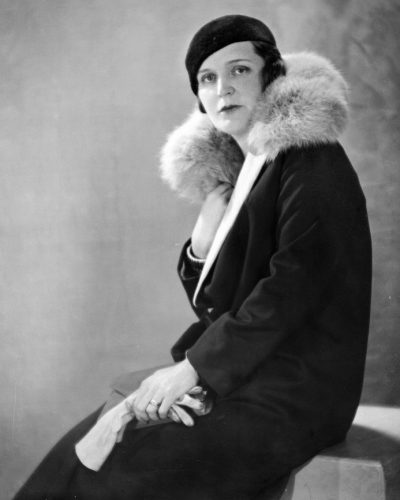
“That no woman has ever been a great composer is an accepted fact; that she is never likely to become so, more than a probability.”—Anonymous, The Musical Times (1887)
This May, the Daily Classical Music Post will set the record straight. There have been many great women composers, and I’m going to introduce you to just 31 of them and their wonderful music.
Germaine Tailleferre: Sonata per arpa (1957)
Germaine Tailleferre (1892–1983) was the only female member of Les Six, the group of French composers who joined together in part as a reaction against the musical style of Wagner, Debussy, and Ravel. Jean Cocteau helped to form this avant-garde group: Tailleferre, Georges Auric, Louis Durey, Arthur Honegger, Darius Milhaud, and Francis Poulenc were its members.
Tailleferre wrote several of her most important works in the 1920s, including ballet scores. She wrote a lot of film music in the 1930s. She spent most of World War II in the United States. She returned to France in 1946 and continued to compose until a few weeks before she died.
Her Sonata for Harp was written in 1953, and it is a beautiful, ethereal work. It was composed for and is dedicated to the Spanish harpist Nicanor Zabaleta. James Reel said, “Bobbling along with a vaguely antique air, the Allegretto is an intricately sunny march, as if for toy soldiers. . . . The languorous Lento glides along on a habanera rhythm, a nod to Zabaleta’s nationality. . . . Alternating with a little fanfare motif, the jazzy main theme of the sparkling Perpetuum mobile (Allegro gaiement) is a distant cousin of the opening melody of Ravel’s Piano Concerto in G major.”
My classical music post for today is Germaine Tailleferre’s Sonata for Harp.


Leave a Reply