

Hubert Parry: Symphony No. 3, “The English.”
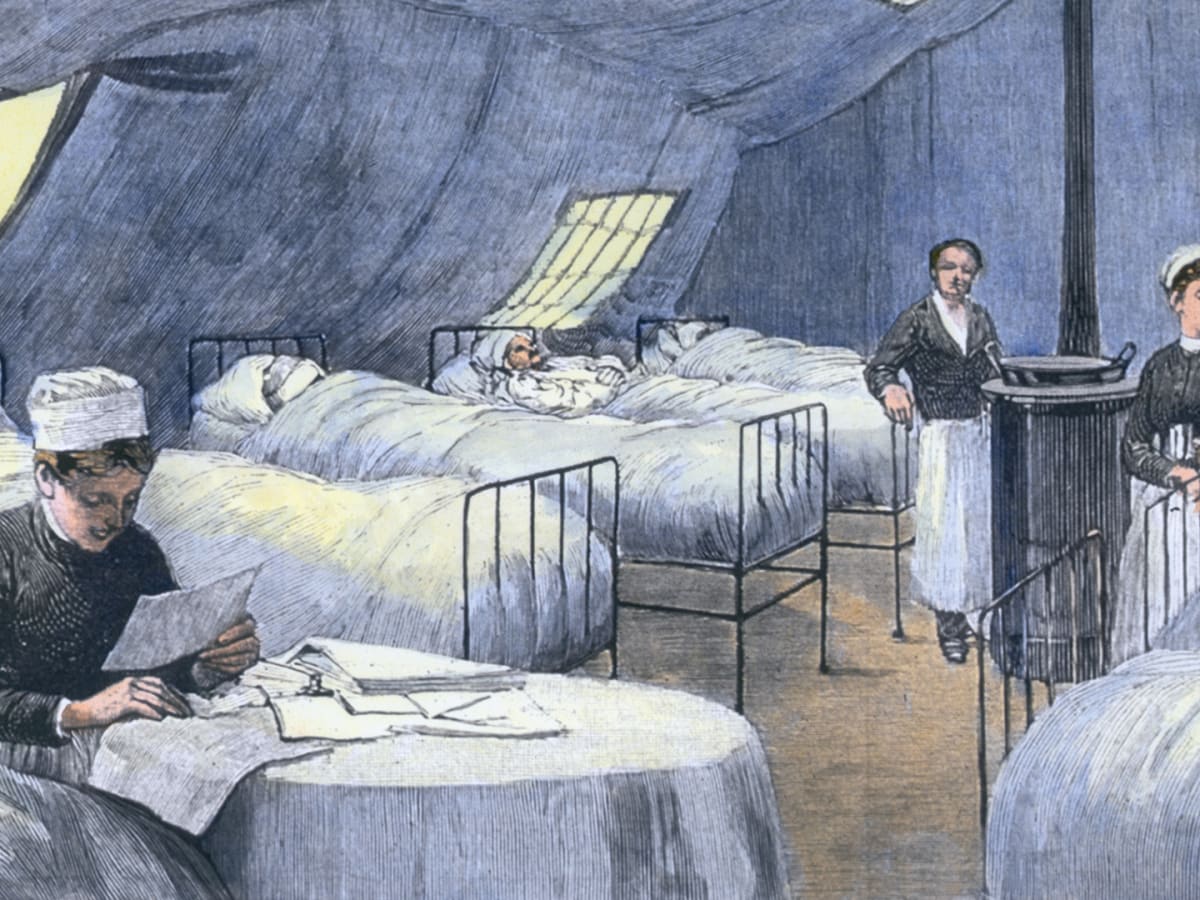
This April, the Daily Classical Music Post will look at composers who died during pandemics, as well as some who survived and a few who composed works to commemorate those who lost their lives.
“Great fears of the Sickenesse here in the City, it being said that two or three houses are already shut up. God preserve us all.”—Samuel Pepys
The English composer Hubert Parry (1848–1918) died of the Spanish flu.
Sir Hubert Parry – Symphony No. 3 “The English” (1889)
Most people know Parry through his great choral works like the coronation anthem “I Was Glad,” the song “Jerusalem,” and the ode Blest Pair of Sirens. However, these are but a snippet of his output. His influence on the English classical music world was substantial. He began his career in music as a contributor to the very first Grove’s Dictionary of Music and Musicians and then became professor of composition and music history at the Royal College of Music in London. He succeeded his mentor, George Grove, as head of the RCM, and at the same time was Professor of Music at Oxford. He taught the great composers of the new English Renaissance of the early 20th century, including Ralph Vaughan Williams, Gustav Holst, Frank Bridge, and John Ireland, and Edward Elgar acknowledged the debt he owed to Parry as well.
Interestingly, Parry, like Charles Ives, initially worked in insurance. He studied composition privately, and was influenced greatly by the music of Richard Wagner.
Parry’s third symphony, known as “The English Symphony,” was composed in 1893. There are Brahmsian touches, not surprising as Parry had hoped to study with Johannes Brahms at one point. And as most of us really know Parry just through his choral music, I thought it would be exciting to hear this beautiful and well-received symphony.
My classical music post for today is Hubert Parry’s Symphony No. 3, “The English.”


Leave a Reply