

Guillaume de Machaut: “Plange regni / Tu qui gregem tuum ducis”
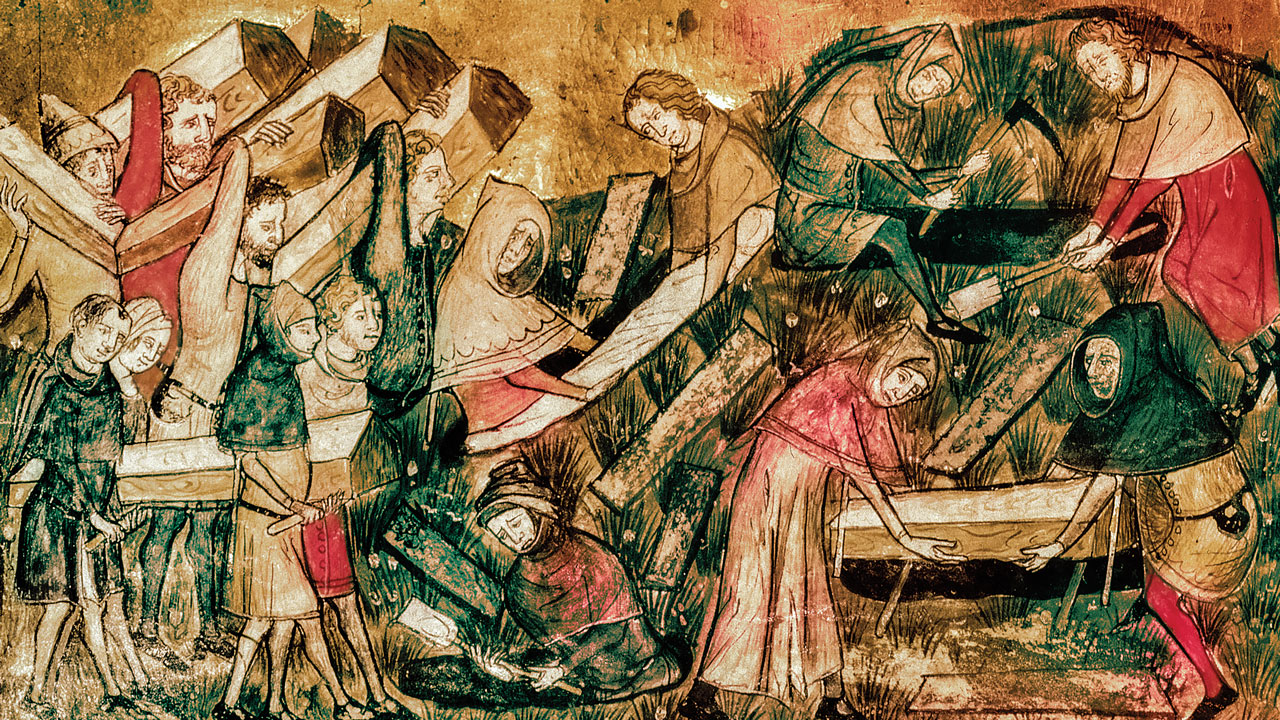
This April, the Daily Classical Music Post will look at composers who died during pandemics, as well as some who survived and a few who composed works to commemorate those who lost their lives.
“Yet it was with those who had recovered from the disease that the sick and the dying found most compassion.”—Thucydides
The medieval French composer Guillaume de Machaut (ca. 1300–1377) is one of the best-known survivors of the Black Death (1347–1352).
French Medieval Guillaume de Machaut : Plange regni & Tu qui gregem tuum ducis
Machaut was one of the leading composers of the Ars nova movement. He was instrumental in the development of the motet and also secular song in the 14th century.
When an event like a pandemic takes place, people try to make sense of it all. Machaut’s music as well as his poetry tried to explain why people were dying: bad star alignment was the main villain. That didn’t stop him from trying to convince people in charge—at that time, Roman Catholic Church officials—to do something to protect the citizenry in and around Reims, where he lived.
Machaut’s motet “Plange regni / Tu qui gregem tuum ducis” is considered by some musicologists (see, for example, A.W. Robertson in Guillaume de Machaut and Reims: Context and Meaning in His Musical Works) to have been directed to the Archbishop of Reims, pleading with him to take care of the people in his city.
You who lead your flock,
Complete the task of a true leader
For to lead and not be led
This is sought in a true leader.
Let the leader lead by the counsel
Of the wise, and not in idleness;
A leader should go in front,
And he who is led should obey;
But if the leader does not know the way
Both will perish needlessly.
The motet begins with the word “Plange” (Weep) in one voice, emphasizing Machaut’s point that the leaders of the city needed to be aware of the suffering of the population. Machaut’s brilliance in word-setting is obvious throughout, with several sections repeating “dux” (leader) or “ducere” (to lead) over and over. Anyone hearing “Plange regni / Tu qui gregem tuum ducis” would have been in no doubt as to what Machaut thought of those who were meant to be in charge in Reims.
My classical music post for today is Guillaume de Machaut’s “Plange regni / Tu qui gregem tuum ducis.”


Leave a Reply