

Maria García Malibran de Bériot: “Rataplan”
“The sad thing is that I leave with so much more to say.”—Béla Bartók
During February, the shortest month of the year, the Daily Classical Music Post has introduced you to (or perhaps reacquainted you with) some composers whose lives were short. Today is the final post in February; the theme for March will be quite different!
Cecília Bartoli – Rataplan – Maria Malibran
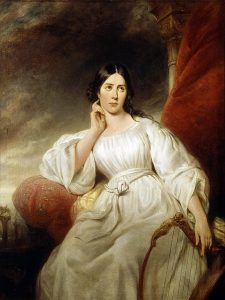
The Spanish opera diva Maria García Malibran de Bériot (1808–1836) was best known as a charismatic singer, but she also composed more than 50 songs in her short yet extremely busy life.
If “Rataplan” is any indication of what she might have composed had she not died from injuries sustained in a fall from a horse at the age of 28—and I think that it is—she would have been a composer to be reckoned with. Composers including Gioachino Rossini and Hector Berlioz praised her “charming originality” and virtuosity. In a review of her songs, Berlioz wrote, “If any other than Madame de Bériot had taken the liberty of writing phrases in this way, one would not have failed to say that the author did not know how to write for the voice. Here, such a reproach would be ridiculous; one might as well say of Paganini or Liszt that they do not know how to compose a part for the violin or the piano.”
“Rataplan” is a chansonette; Malibran took her text from Robert de Rigoulène’s poem “Tambour de Ville.” As Mary Ann Smart says, “Malibran had a voracious, almost desperate, appetite for parties. . . . The pianist Ignaz Moscheles described one such gathering in his diary for 1836: ‘She came at three o’clock; with her were Thalberg, Benedict, and Klingemann. We dined early, and immediately afterward Malibran sat down at the piano and sang for the children, as she used to call it, the Rataplan and some of her father’s Spanish songs. . . . I played afterwards with reversed hands, and with my fists, and none laughed louder than Malibran’.” About 10 years later, Gaetano Donizetti composed his own “Rataplan” for his opera La fille du régiment; there is some speculation that he might have heard Malibran sing her piece and this is what was the (very loose) inspiration for his.
Rataplan, tambour habile
Rataplan rataplan rataplan
Rataplan matin et soir
Rataplan plan par la ville
Rataplan plan plan plan plan
Je vais toujours tambour battant
Je vais touhours tambour battant
Tambour battant, tambour battant
Rrrrrrrrrrrrrrrrrr
Ran plan plan pataplan pataplan
Ran pataplan ran pataplan pataplan plan plan
Pataplan pataplan
Ran pataplan pataplan pataplan

Aux plaines de pyramides
J’ai mené, tambour battant
Ran pataplan pataplan pataplan
Les francais de gloire avides
À la victoire enchantant;
Mais au sort toujours docile
Me voilà dans mes foyers
Devenu tambour de ville de tambour de grenadiers
De tambour de grenadiersde grenadiers

Tambourinant sans relâche
Soir matin et jour et nuit
Ran pataplan pataplan pataplan
J’ai fait il faut qu’on le sache
Dans ce monde bien du bruit;
Dans l’autre monde j’espère
De venir illustre aussi
Si je puis encore faire
Même bruit qu’en celui-ci
Même bruit qu’en celui-ci, qu’en celui-ci

Et quand de quitter la terre
Enfin ce sera mon tour
Ran pataplan pataplan pataplan
Je desire qu’on m’enterre
À côté de mon tambour;
Quand des anges les trompettes
Sonneront le jugement
Je pourrai de mes baguettes
Faire un accompagnement
Faire un accompagnement
Plan plan plan plan
My classical music post for today is Maria García Malibran de Bériot’s “Rataplan.”


Leave a Reply