

Hugo Distler: Die Weihnachtsgeschichte, Op. 10
“The sad thing is that I leave with so much more to say.”—Béla Bartók
During February, the shortest month of the year, the Daily Classical Music Post will introduce you to (or perhaps reacquaint you with) some composers whose lives were short.
Hugo Distler: “Die Weihnachtsgeschichte”
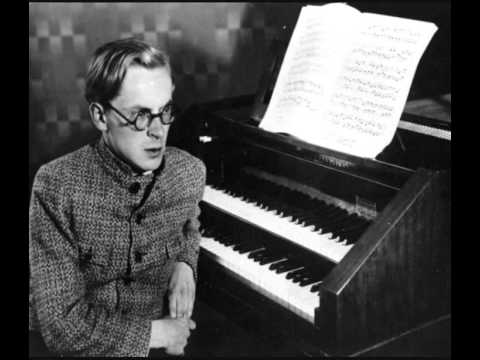
The German composer and organist Hugo Distler (1908–1942) is considered to be one of the most significant German composers of his generation, although even in church circles, for which the majority of his works were written, he is barely known.
Distler was the head of the chamber music department at Lübeck Conservatory in the early 1930s; in order to take and keep this appointment, he had to join the Nazi Party, but he was never happy about that. In the late 1930s he moved to Stuttgart, and then in 1940 he moved to Berlin first to teach at the Hochschule für Musik and then to conduct the State and Cathedral Choir. The restrictions placed on him by the Nazis (and perhaps the fact that some Nazis called his music “degenerate”) weighed heavily, and it all became too much for him at the age of 34, when he committed suicide. Nick Strimple says, “ . . . it appears that he saw the futility of attempting to serve both God and Nazis, and came to terms with his own conscience unequivocally.”
Distler’s music is described as polyphonic, melismatic, and neo-Baroque. There are definite echoes of Heinrich Schütz’s choral works, particularly in today’s selection, the a cappella Die Weihnachtsgeschichte, Op. 10. Distler’s signature pentatonic harmonies can be heard throughout. The world lost a unique musical voice when Distler died. (You can see the text at Die Weihnachtsgeschichte (Hugo Distler) – ChoralWiki).
My classical music post for today is Hugo Distler’s Die Weihnachtsgeschichte, Op. 10.


Leave a Reply