

Fanny Mendelssohn: “Im Herbste,” Op. 10, No. 4
“The sad thing is that I leave with so much more to say.”—Béla Bartók
During February, the shortest month of the year, the Daily Classical Music Post will introduce you to (or perhaps reacquaint you with) some composers whose lives were short.
Five Songs for Voice and Piano, Op. 10: No. 4 Im Herbst
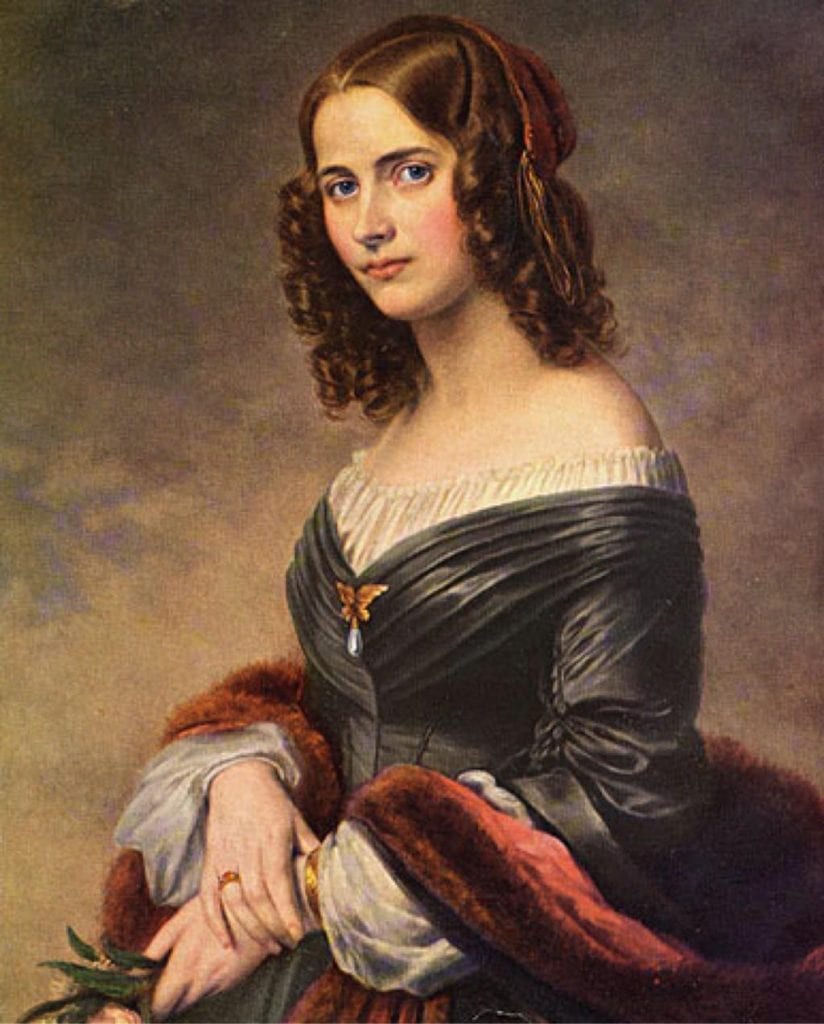
Fanny Mendelssohn (1805–1847), like her brother Felix, died young as a result of a stroke. Her parents and grandfather died from the same thing.
Fanny was, in many ways, considered to be the more talented of the siblings, but she suffered from the prejudices against women composers (and women musicians in general) in the 19th century. Even her father was mildly dismissive of her abilities; he told her once, speaking about her brother, “Music will perhaps become his profession, while for you it can and must be only an ornament.” Thanks, Dad.
Given this, and also her short life, it is all the more astonishing that we have so much of her music to enjoy. She composed close to 500 works, including piano pieces and songs as well as chamber music, and although some were published under Felix’s name, many were published under her name in her lifetime. Apparently some of her songs were particular favourites of Queen Victoria, even though the queen was under the impression that they had been composed by Felix. Fortunately, he owned up to the true authorship.
Although for a long time musicians saw Fanny as a talented sister of Felix but not much more, now she is understood to have her own voice, with a much freer and more experimental form and harmonic structure. She is less conventional than her younger brother; he sometimes called her music “mannered,” and there was some friction and rivalry between the two. But there also was a deep respect between them, and Felix was a particular champion of her songs.
Fanny’s song,“Im Herbste,” Op. 10, No. 4 is a lovely song of loss and sadness, and I think it shows her understanding of the relationship between the music and the text.
Auf des Gartens Mauerzinne,
bebt noch eine einz’ge Ranke,
also bebt in meinem Sinne,
schmerzlich nur noch ein Gedanke.
Kaum vermag ich ihn zu fassen,
aber dennoch von mir lassen,
will er, ach, zu keiner Frist.
Und so denk ich ihn und trage
alle Nächte, alle Tage,
mit mir fort die dumpfe Klage,
daß du mir verloren bist.

[On the top of the garden wall
there quivers a single last vine,
just as in my mind there quivers
painfully a single thought.
I can hardly catch it,
but it will not leave me alone,
alas, not even for one second.
And so I contemplate it, and endure
all the nights and days,
and with me always is the hollow lament,
that you are lost to me.]
My classical music post for today is Fanny Mendelssohn’s “Im Herbste,” Op. 10, No. 4.


Leave a Reply