

George Gershwin: Rhapsody in Blue
“The sad thing is that I leave with so much more to say.”—Béla Bartók
During February, the shortest month of the year, the Daily Classical Music Post will introduce you to (or perhaps reacquaint you with) some composers whose lives were short.
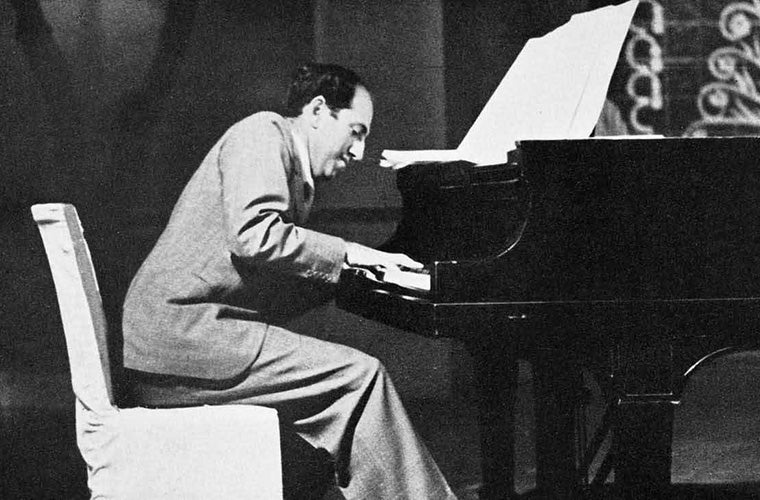
Gershwin plays Gershwin Rhapsody in Blue (1927)
George Gershwin (1898–1937) was, in a word (or two), ’S marvelous. In his short life, many classical musicians dismissed him, but in so many ways he was way ahead of his time. The innovative French composers who were his contemporaries got it; they loved the way that he combined jazz and classical idioms. And Arnold Schoenberg is reported to have said when Gershwin asked for composition lessons, “I would only make you a bad Schoenberg, and you’re such a good Gershwin already.”
In 1924, Gershwin wrote Rhapsody in Blue, to a commission by the American bandleader Paul Whiteman. Apparently Gershwin only found out about the commission at the beginning of January when we read that his new “jazz concerto” was due to receive its premiere in February. He hastily put together a piano score, and Whiteman’s arranger Ferde Grofé (yes, that Ferde Grofé, composer of the Grand Canyon Suite) orchestrated it for Whiteman’s ensemble.
The premiere took place on 12 February 1924 at a concert called “An Experiment in Modern Music.” It quickly became one of Gershwin’s most popular pieces, although many critics point out that it is not really a fully formed work. Some people have even called it immature. What is indisputable is that it is one of the most recognizably American works in the classical repertoire, and it shows the genius of Gershwin in every single measure.
The recording of Rhapsody in Blue that I am sharing today is the original one, using Gershwin’s own piano roll recording. Every time I hear the opening clarinet, I get chills. According to Charles Schwartz, the opening clarinet riff came about in this way: “ . . . as a joke on Gershwin, [Ross] Gorman (Whiteman’s virtuoso clarinettist) played the opening measure with a noticeable glissando, adding what he considered a humorous touch to the passage. Reacting favourably to Gorman’s whimsy, Gershwin asked him to perform the opening measure that way at the concert and to add as much of a ‘wail’ as possible.”
What else would Gershwin have written had he not died so young? At least we do have all of the wonderful songs as well as Porgy and Bess, An American in Paris, and the Concerto in F for piano and orchestra.
My classical music post for today is George Gershwin’s Rhapsody in Blue.


Leave a Reply